
Picking, cutting, or trimming weeds on County-managed properties.
Weeds
Not all plants are good for our environment. Some weeds must be controlled on your property. These weeds are called noxious and prohibited noxious under the Alberta Weed Control Act. These weeds spread quickly and can cause serious problems. They push out native plants and harm wildlife. Loss of biodiversity is directly linked to invasive species and they have played a key role in 60% of global plant and animal extinctions.
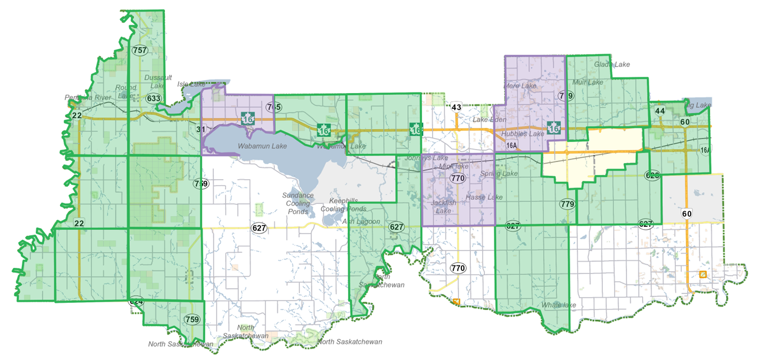
As shown on the map below, green areas show where weed control work has already taken place, and purple areas show the focus areas for 2026. We will begin by controlling weeds on County-owned land. After that, we will inspect private properties.
If noxious or prohibited noxious weeds are found, the property owner or occupant is responsible for controlling them.
Have you spotted a noxious weed? Is there a concern about the roadside mowing or vegetation management program? Help us identify these issues so we can follow up on your County Concerns.
Weeds on County Property
On County-managed land, weed control crews use a variety of methods to help stop weeds from spreading.
- Spot or blanket spraying along roadsides and other County-managed properties.
- Spraying takes place between May and September, with most roadside and subdivision spraying occurring between June and September.
- Selective herbicide application is used to control noxious and prohibited noxious weeds and the re-growth of small brush.
- Weed control follows the Alberta Weed Control Act, which identifies which weeds must be controlled by the County and by private landowners.
Herbicides that may be used include:
- Clearview (PCP #29752)
- Truvist (PCP #30920)
- Lontrel 360 (PCP #23545)
- Milestone (PCP #28517)
- Navius VM (PCP #31382)
- Vantage XRT (PCP #29992)
Some of these herbicides remain active in the soil. For this reason, soil or plant material from ditches or County-owned land should not be used elsewhere.
Biological control is the use of a weed’s natural enemies to help control its growth. These natural enemies feed on the weed or cause disease, which helps slow its growth, reproduction, and spread over time.
The County currently has eight sites using biological control to manage Canada thistle, toadflax, and leafy spurge.
Species used in these efforts include:
- Canada thistle stem weevils
- Stem gall flies
- Black spurge beetles
- Yellow toadflax stem‑miner
Parkland County only uses approved biological control agents that meet the requirements of the Plant Protection Act, the Pest Control Products Act, and the Canadian Food Inspection Agency (CFIA). These requirements cover the importation, handling, and release of biological control agents in Canada.
Once federal approval is received, biological control agents are released on their target weeds at selected sites. These sites are closely monitored. Information collected helps determine how well the agents survive in western Canada and how effective they are at controlling the target weed.
Over 4,000 km of roadsides mowed each year to help stop weeds from spreading. Roadside mowing typically begins in June, weather permitting. For more information, visit our Roadside Mowing page.
Subdivision and Reserve Weed Control
Agricultural Services will spot spray ditches and reserves using selective herbicides for species designated as noxious or prohibited noxious under the Weed Control Act.
Signs will be posted when weed control is taking place and removed when it is safe to re-enter.
The County uses an integrated weed management approach, which may include chemical, mechanical, biological, and hand removal methods to control invasive species.
A no spray area is a section of municipal road that is normally maintained under the Roadside Vegetation Management Program, but where the adjacent landowner has requested that herbicides not be used.
Once the agreement is signed and in place, the County provides the landowner with two signs mounted on stakes that are a minimum of five feet tall. These signs must be placed in a highly visible location, as close as possible to the property line.
Participation (Before May 1)
The no spray agreement is annual and must be completed and returned each spring before May 1. By signing the agreement, the landowner assumes responsibility for all vegetation control in the designated area. This includes prohibited noxious and noxious weeds listed under the Alberta Weed Control Act, as well as grass, brush, and sweet clover.
Inspection
If County staff complete an inspection and find that vegetation is not being properly managed using non‑chemical methods, the County reserves the right to spray the affected area. The no spray area will then be returned to the regular Roadside Vegetation Management Program.
Weeds on Private Property
Landowners must manage weeds on their property. County staff are available to provide expert advice on weed control strategies for your property. These plants spread fast and can take over fields and natural spaces. Early action is key. Some weeds to watch for include:


How you can help:
- Check your property for these weeds
- Act early: pull them out or use approved herbicides
- Stay informed: watch for County updates about focus areas
- Use County resources: equipment rentals and information are available through Agriculture Services
More information can be found on:
To make management easier, the County also offers two pasture sprayers for rent, which are ideal for applying herbicides on larger areas. Learn more:
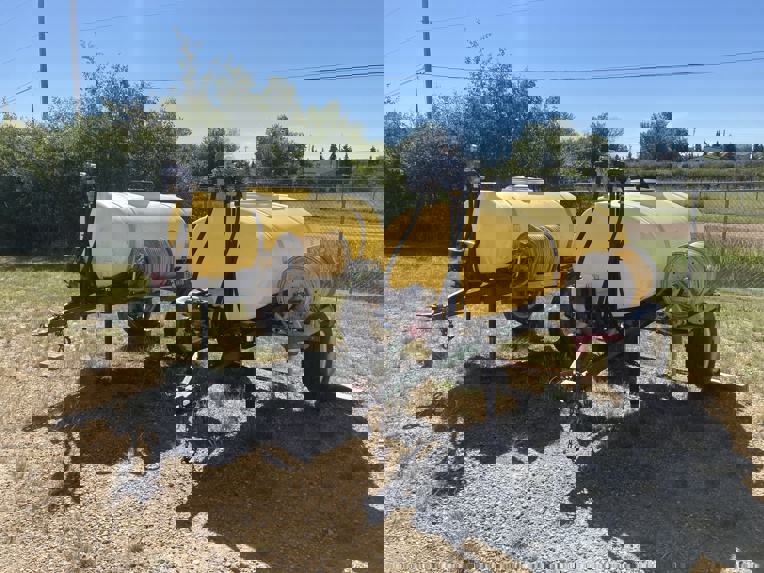
The County has two 300‑gallon boomless sprayers available for residents to rent. Each sprayer has two nozzles that spray 15 to 20 feet each, for a total spray width of 30 to 40 feet.
The sprayer includes 100 feet of hose on a reel with a handheld spray gun. It is powered by a gas‑powered pump, and no tractor is required to operate it.
Weed inspectors work in designated focus areas and also respond to complaints. They have the authority to enter private property without landowner permission to inspect for noxious and prohibited noxious weeds.
A weed notice may be issued if no effort is made to prevent the spread of noxious weeds or to destroy prohibited noxious weeds.
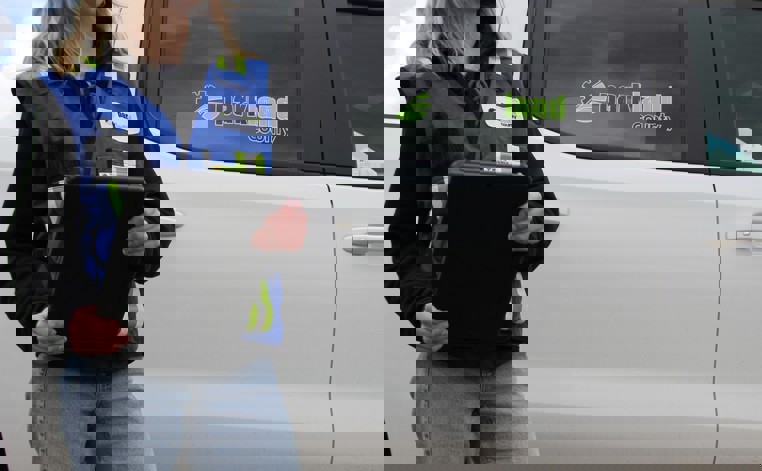
County weed inspectors drive vehicles marked with the Parkland County logo and wear blue reflective vests or coveralls. They can provide identification upon request. Inspectors will make every effort to contact someone on site when they arrive, but it is not common practice to call ahead.
Residents are welcome to ask inspectors questions. Please remember to treat County staff with respect.
Please contact us if you would like a list of contractors who may offer mowing, spraying, or hand‑pulling services. This list is not all‑inclusive and does not represent a recommendation by Parkland County. Property owners are responsible for verifying all contractor credentials, certifications, and claims.
Contact Us
Parkland County Centre
53109A HWY 779, Parkland County, AB T7Z 1R1
General Office: 780-968-8888
Toll Free: 1-888-880-0858
After hours: 780-968-8400
Email: hello@parklandcounty.com


