Budgets and Finance

Municipal Budget

Each year, Council provides general budget direction to administration. This direction sets the desired service levels and tax rates. Council approves the budget in December for the subsequent year, with final budget approval happening in April.

Council approved the 2026 Budget on December 9, 2025:

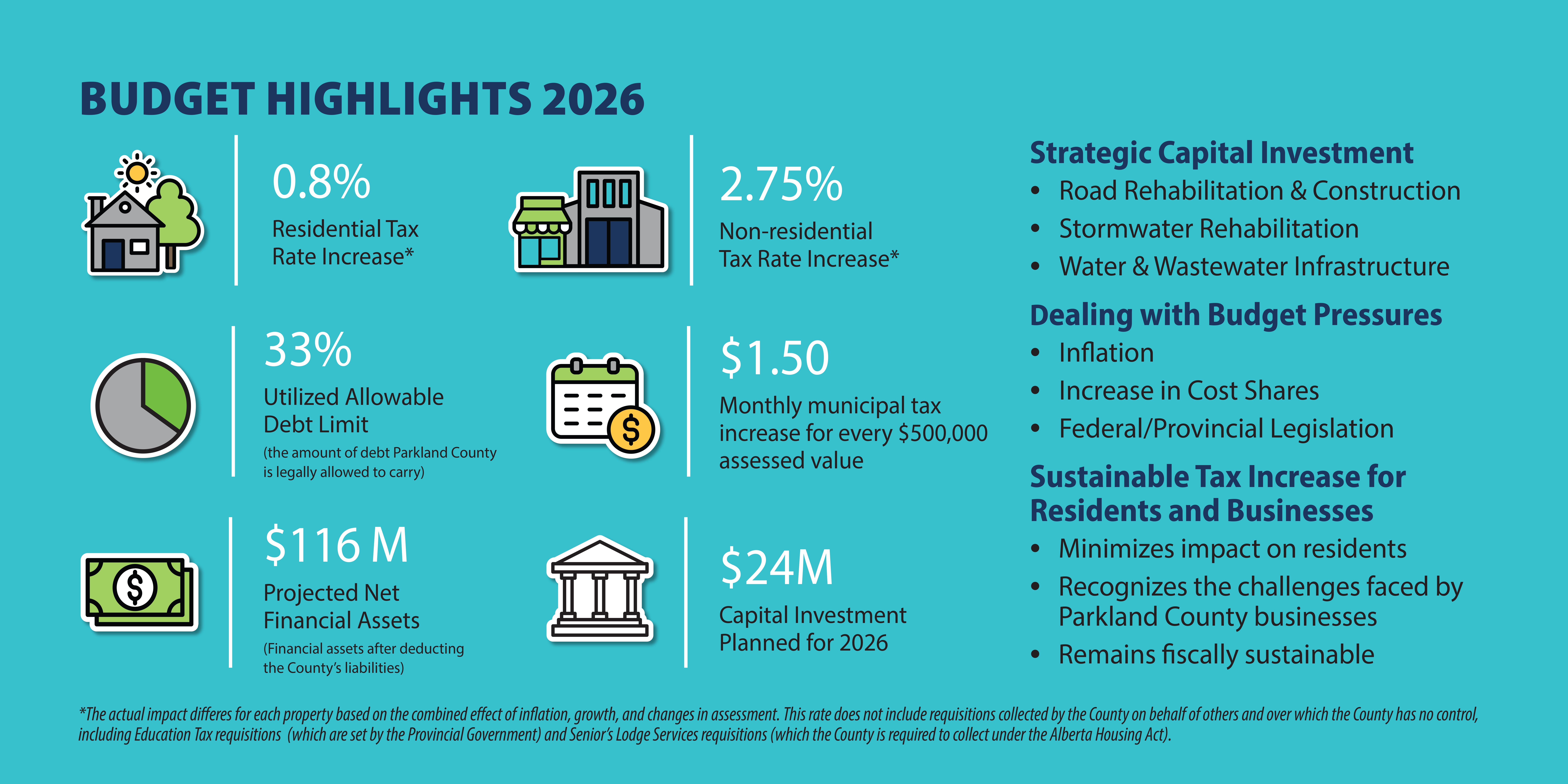
Below, you’ll find an at-a-glance overview of this year’s budget highlights, a breakdown of where our budget dollars come from, how we’re spending those dollars to meet your priorities, and how our tax rate compares to our neighbours.

Click here to download the budget highlights.

infographic of budget highlights

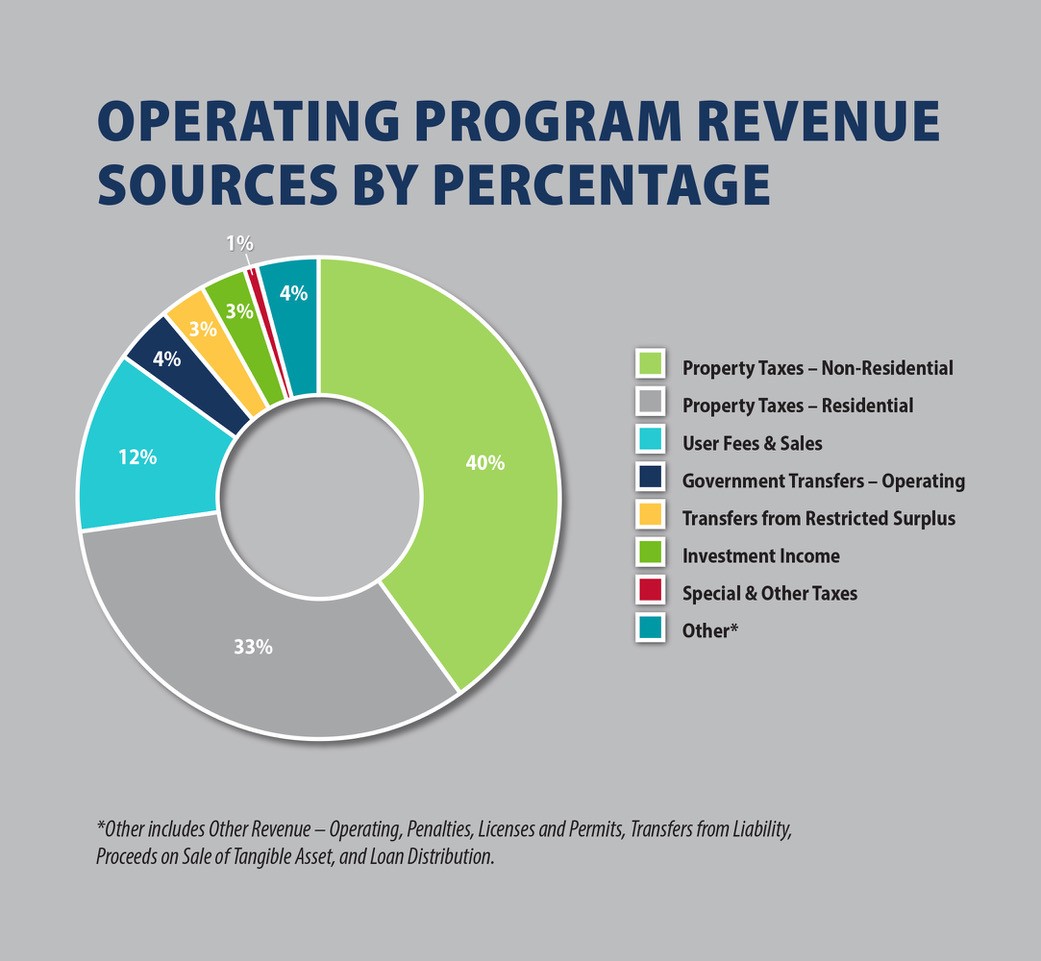
The County’s operating program revenue (e.g. the money that funds everyday County services) comes from a variety of sources. Non-residential property taxes provide for 40% of the $107.8 million budget, while residential propery taxes provide for 33%. The remaining 27% comes from lots of different places. See the infographic below for a breakdown: 
infographic detailing operating program revenue sources by percentage

Your tax dollars go towards funding a variety of crucial services that the community relies on, from roads and infrastructure, to parks, recreation, agriculture, and more. 

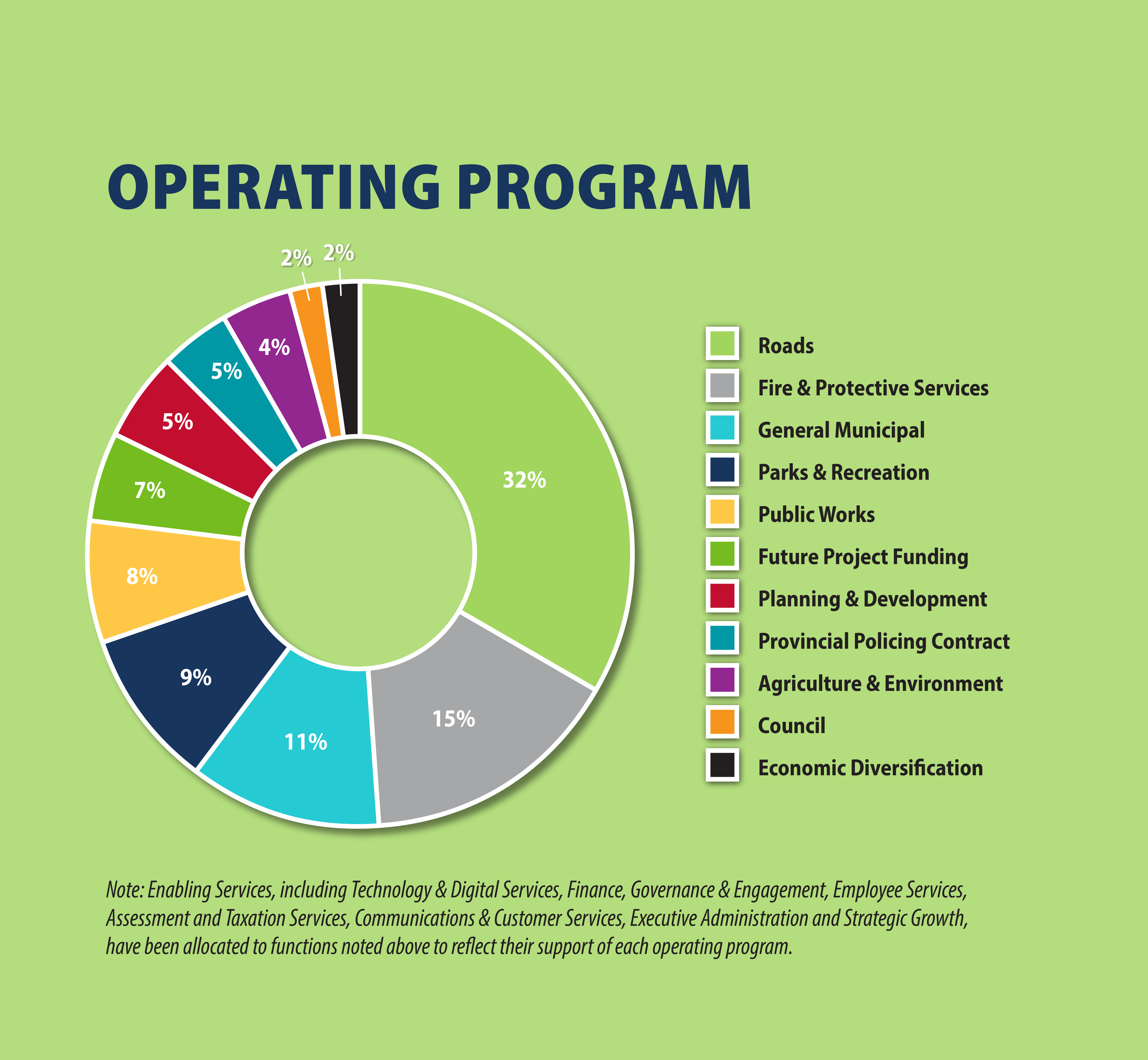
The chart below shows how much of your tax dollars contribute to the different components of our Operating Program Budget (e.g. the everyday costs to run County services):

infographic of operating program

Function Definitions: 

  • RoadsThis includes Gravel Road Maintenance, Hard Surface Road Maintenance, Snow and Ice Control, Brush Control, Sign and Traffic Control, Refuse Pick-Up, Dust Control, and Engineering Services Support.
  • Fire and Protective ServicesThis includes Fire Services, 911 Call Centre, and Enforcement Services.
  • General MunicipalThis includes savings for future commitments, and interim financing and other revenue sources.
  • Parks and Recreation - This includes Family and Community Support, Parks Operations, Cost Shares, TransAlta Tri Leisure Centre, and Libraries.
  • Public Works - This includes Fleet Services, Facilities, Solid Waste Services, and Water and Wastewater Services.
  • Future Project FundingThis includes savings for future Parkland County projects.
  • Planning and DevelopmentThis includes Development and Subdivision Planning, and Safety Codes.
  • Provincial Policing Contract – This includes Provincial RCMP Costs.
  • Agriculture and EnvironmentThis includes Agriculture support programs, and environmental stewardship.
  • CouncilThis includes Elected Officials.
  • Economic DiversificationThis includes Business Attraction and Development, and Municipal Land Management.

Did you know Parkland County is responsible for 914 kms of surfaced roads, and 1,252 kms of gravel roads, for a total of 2,166 kms? If you lined them up end to end, you could just about drive from Edmonton to Vancouver... and back again! 

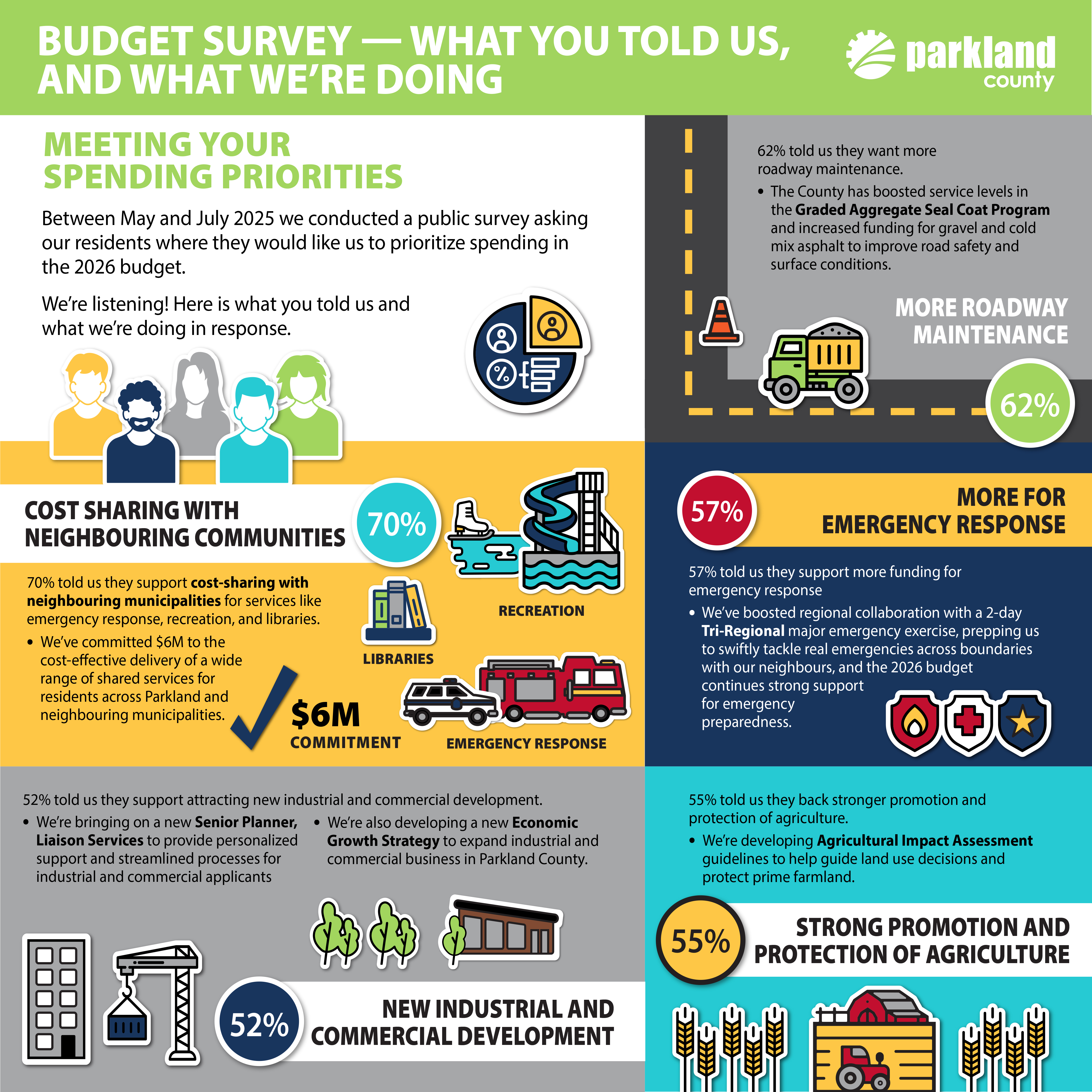
Between May and July 2025 we conducted a public survey asking our residents where they would like us to prioritize spending in the 2026 budget.  

We’re listening! Here is what you told us, and what we’re doing in response:


Accounting process

Parkland County has a centralized accounting process. The Finance Department is responsible for the common financial and computer systems used to record all financial transactions. The Finance Department prepares the annual financial statements and annual report and provides monthly financial reporting to both Council and line department managers.

Contact Us

Parkland County Centre
53109A HWY 779, Parkland County, AB T7Z 1R1

General Office: 780-968-8888
Toll Free: 1-888-880-0858
After hours: 780-968-8400
Email: hello@parklandcounty.com

Report a Concern